2 Weeks Best of the Red Sea — 17 July, Hurghada
14 nights from Hurghada to Hurghada — the full length of the Egyptian Red Sea in one voyage.

Fourteen nights, one way down the whole Egyptian Red Sea: from Hurghada north to the wrecks and Dahab, around the tip of Sinai at Ras Mohamed, across open water to the Brothers, Daedalus and Elphinstone, then south to Sataya, Abu Dabbab and St. John’s, ending in Port Ghalib. This is how the route ran and what each leg asks of a diver.
The trip in short
- Route: Hurghada, northern wrecks, Dahab (Blue Hole, Canyon), Ras Mohamed, Brothers, Daedalus, Elphinstone, Sataya, Abu Dabbab, St. John’s, Port Ghalib
- Lunghezza: 14 nights on board M/Y Aphrodite, one way, Hurghada Marriott Marina to Port Ghalib Marina
- Immersione: 3 to 4 dives a day, wrecks, walls, offshore reefs, caves and pinnacles
- Level: Advanced Open Water and at least 50 logged dives, required by the marine park rules for the Brothers and Daedalus
- Gas: Nitrox 32% free for certified divers, 12 L tanks included, 15 L for rent, trimix and stages for technical divers on request
North: the wrecks
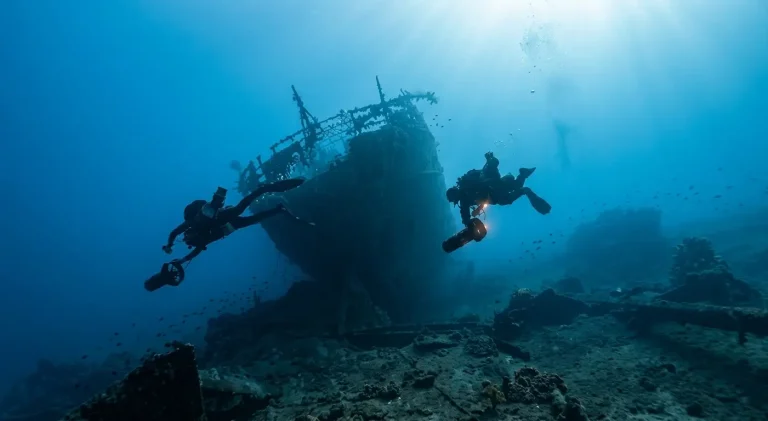
We start the way most northern trips start, on the wrecks between Hurghada and the Strait of Gubal. Penetration is possible on several of them for those trained for it, and the rest of the group dives the outside, where the hulls have turned into reefs: soft coral on the railings, glassfish in the holds, batfish and jacks hanging in the current off the bow. Wreck days are about planning, so the guides brief each dive with the layout, the depth of the deck and the way back up.
Dahab: Blue Hole and Canyon
Few liveaboards go this far up the Gulf of Aqaba. The Blue Hole is a sinkhole in the reef that drops past 100 metres. As recreational divers we enter at the Bells, a narrow chimney that opens onto the wall, drift along at a sensible depth and finish inside the Hole. The Arch at around 55 metres is technical depth and stays a technical dive. The Canyon is a crack in the reef you can drop into, with light falling in from above and glassfish packed inside. Both are calm, clear and very different from the open-sea diving that comes later.
Ras Mohamed
The southern tip of Sinai, where the Gulf of Suez and the Gulf of Aqaba meet. Shark and Yolanda Reef is the dive here: a wall with strong current at the point, schools of barracuda, snapper and unicorn fish in the blue, and the scattered cargo of the Yolanda on the plateau, including the famous toilets and bathtubs. Timing the current matters, and the guides pick the entry for the tide.
The Brothers, Daedalus and Elphinstone
After Ras Mohamed comes the long overnight crossing to the Brothers, two islets in open water off El Quseir. This is the heart of the trip. Big Brother has the Numidia and Aida wrecks on its walls, Small Brother has its north and south plateaus where grey reef sharks patrol and thresher sharks show up early in the morning. Daedalus, a lone reef with a lighthouse further south, is known for hammerheads off the north plateau in summer. Elphinstone, off Marsa Alam, is the best-known spot in Egypt for oceanic whitetip sharks in autumn.
All three are offshore walls with current and often a swell on the surface. Entries are from the zodiacs, negative or with a quick descent, and you need to be comfortable in blue water with no reef in sight. SMB and dive computer are mandatory for every diver.
The south: Sataya, Abu Dabbab and St. John’s
The last part of the trip slows down. Sataya, the Dolphin House, is a horseshoe reef with a lagoon where a resident pod of spinner dolphins rests during the day. We swim with them on snorkel, without chasing, and dive the reef around it. Abu Dabbab is a sandy bay with seagrass where green turtles feed and, on lucky days, a dugong. St. John’s, close to the Sudanese border, is the most remote reef system on the route: pinnacles, swim-throughs and caves at Gota Kebir and Habili Ali, hard coral in very good condition and few other boats. From there it is a short run to Port Ghalib.
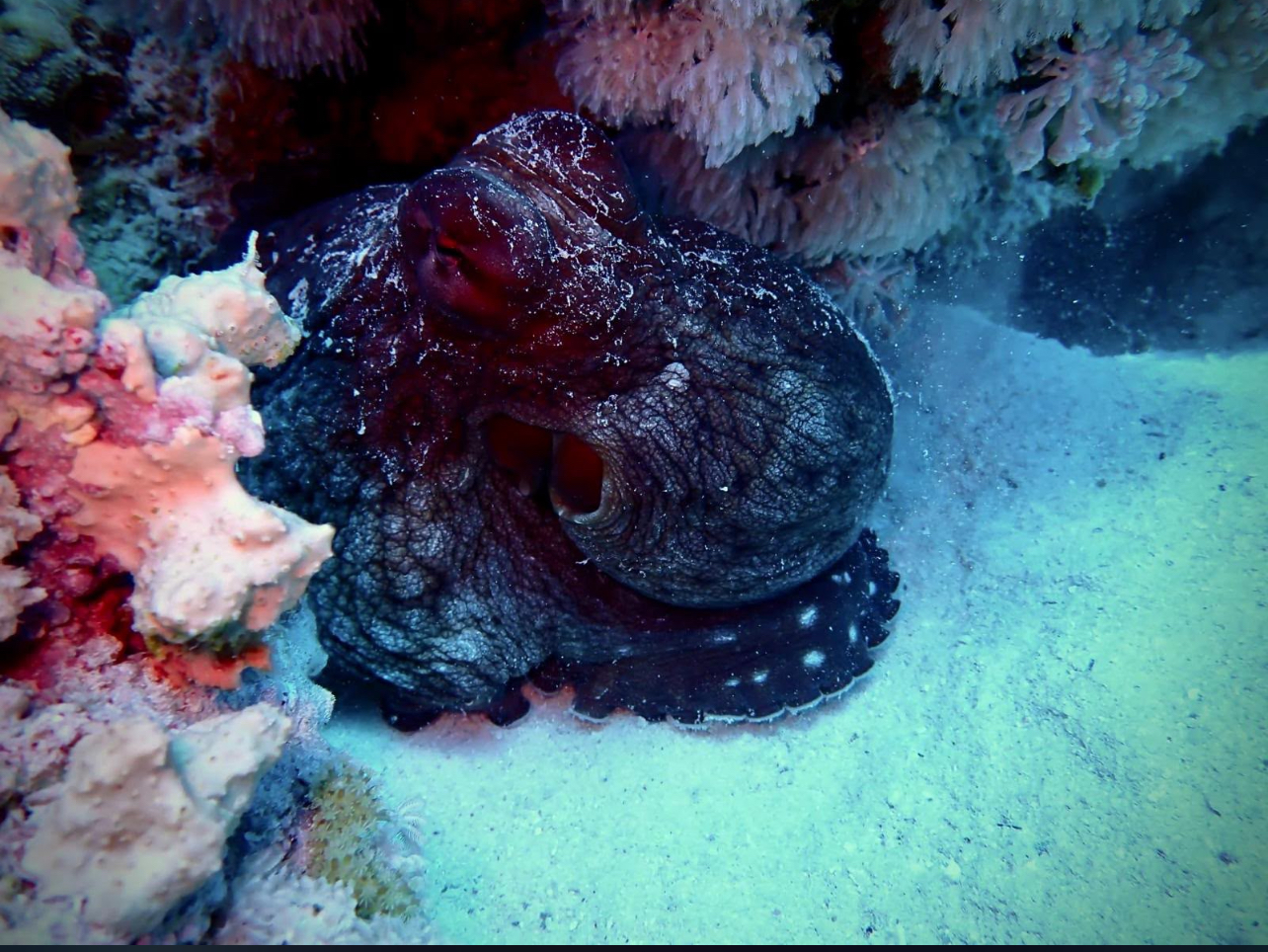
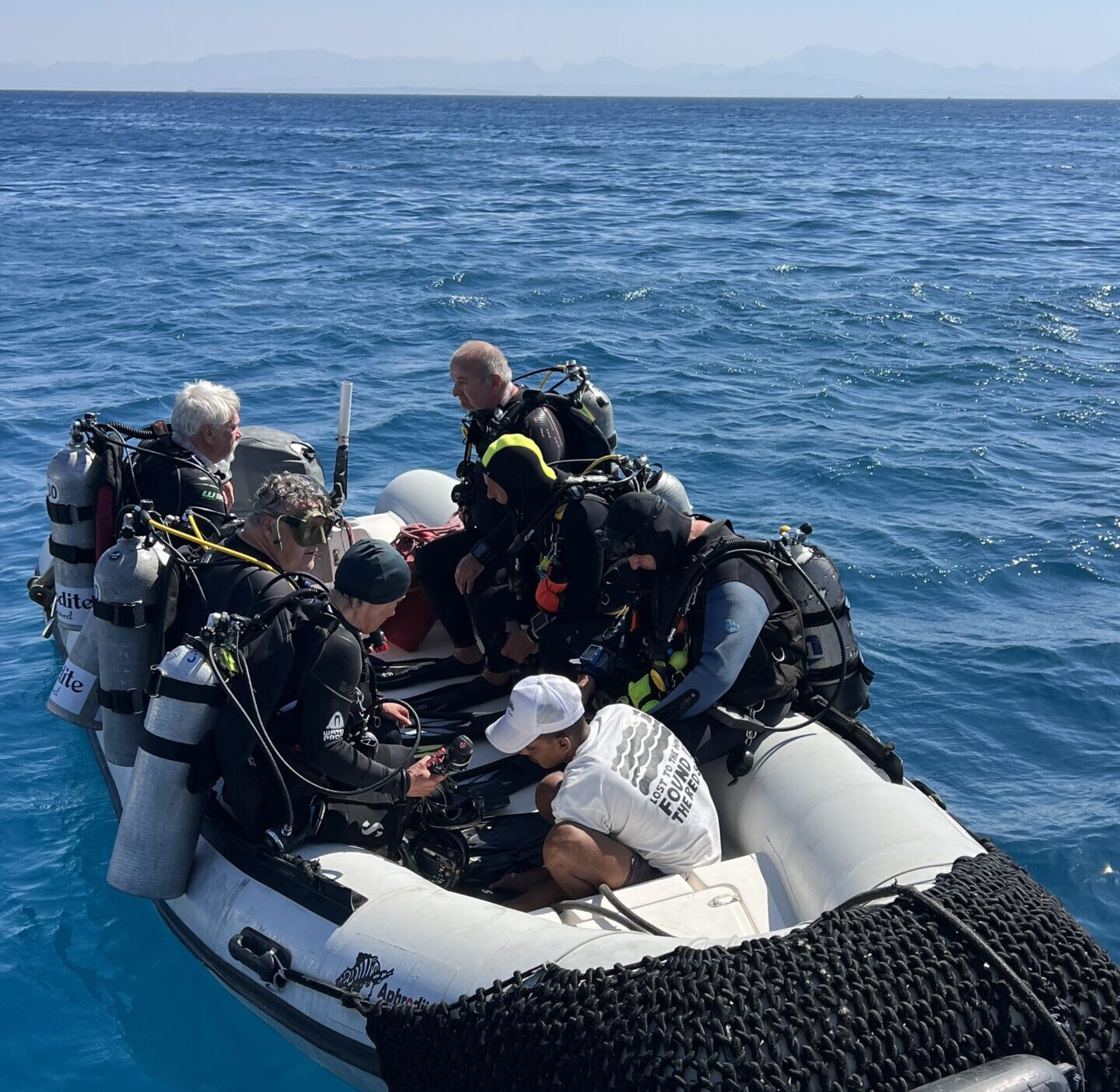
Photos from the trip
Who this route is for
Divers who already know the Red Sea from day boats or a one-week trip and want to see all of it in one voyage. You need Advanced Open Water and 50 logged dives for the Brothers and Daedalus, and you should be at ease with current, blue-water descents and zodiac pick-ups. Nitrox certification is worth having: with three or four dives a day for two weeks, longer no-deco times and shorter surface intervals make a difference. Technical divers can bring twin sets, stages or a rebreather; declare your configuration when you book.
Questions about the 2-week route
Where does the 2-week Best of the Red Sea trip start and end?
It starts at Hurghada Marriott Marina and ends at Port Ghalib Marina near Marsa Alam. Transfers from hotels and airports in Hurghada and Marsa Alam are included.
What certification do I need?
Advanced Open Water and at least 50 logged dives. The marine park authority requires this for the Brothers and Daedalus, and the boat checks logbooks at boarding.
Can I dive the Arch in the Blue Hole?
Only as a planned technical dive with the right training and gas. On the recreational plan we dive the Bells to the Blue Hole along the wall.
When are the sharks at the offshore reefs?
Thresher sharks at the Brothers are seen mostly in the early morning. Hammerheads at Daedalus are a summer sighting, and oceanic whitetips are most reliable in autumn, from October to December. Wild animals keep no schedule, so treat these as odds, not promises.
How do I book the next departure?
Upcoming dates and free cabins are on the schedule. Bookings go directly to the owners of the yacht, with no agent in between.
More about the reefs on this route: the Brothers, Daedalus, Elphinstone, St. John’s and Sataya.